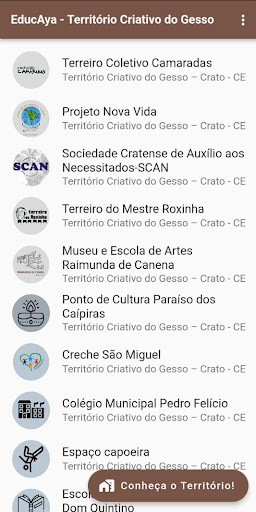
In the municipality of Crato, home of the action proposed in the project “The curriculum and teacher training processes in the field of ethnic-racial relations from an inter and transdisciplinary perspective”, the research is limited to the neighborhood of Gesso. This community is located between the Centro, Pinto Madeira, Santa Luzia and São Miguel neighborhoods. According to Silva and Amorim (2018), at the beginning of the 20th century, plaster stones were taken from this location to the capital Fortaleza. Historically, it is an area little served by the Public Power, concentrating several social problems, standing out as a territory with a majority of Afro-descendants and the presence of indigenous descendants, who live from small businesses, provision of services and social benefits. Institutions and Non-Governmental Organizations have been active in the community, such as Projeto Nova Vida founded in 1992, Sociedade de Auxílio aos Necessitados – SCAN founded in 1940 and Coletivo Camaradas founded in 2007. These are actions aimed at
children, women, young people and elderly people with the creation of community libraries, poetry circles, cultural meetings, urban interventions, sporting activities, political and sustainability training, actions to strengthen self-esteem, among others. In the second half of 2021, the neighborhood has been undergoing urban and landscaping reform, coordinated by Coletivo Camaradas and with the participation of residents.
in buildings, in collective care, in improving urban mobility with an eye on accessibility, providing aesthetic beauty where people feel part of this movement and reflecting the importance of the discussions that have been held by this Collective regarding the right to the city.